Hispanic & Latino Bias in Healthcare Seminar with AMST ‘29
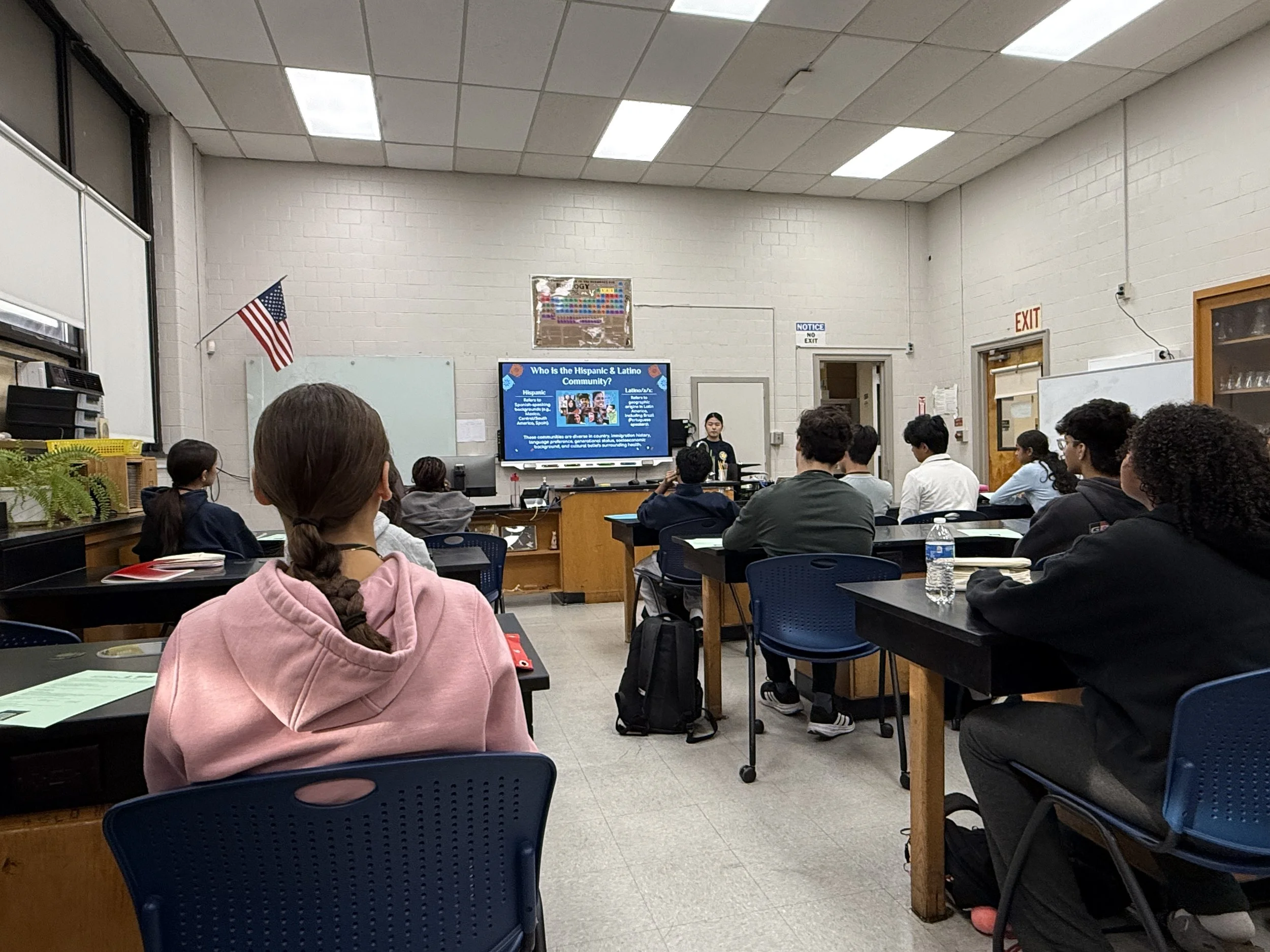
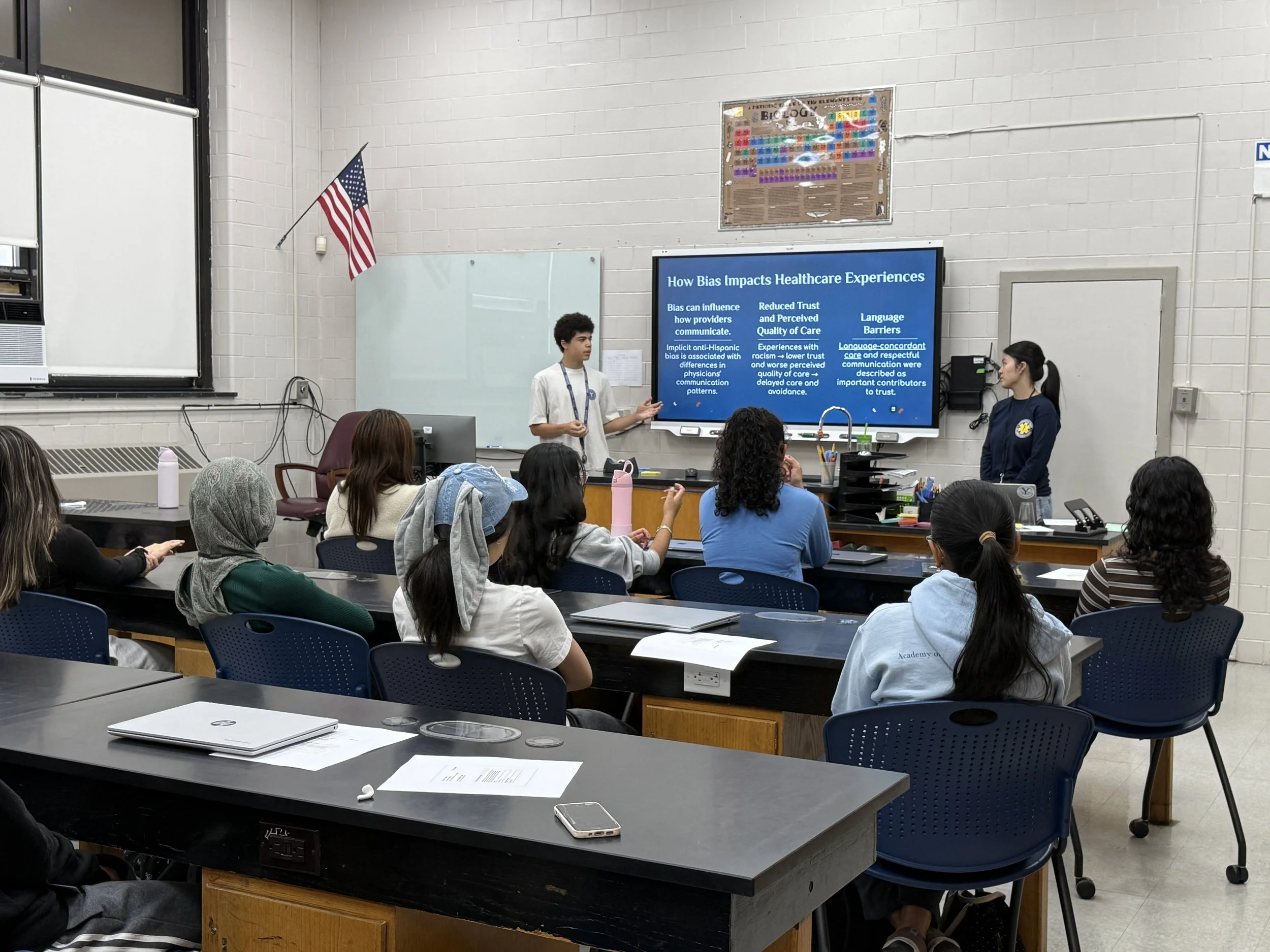
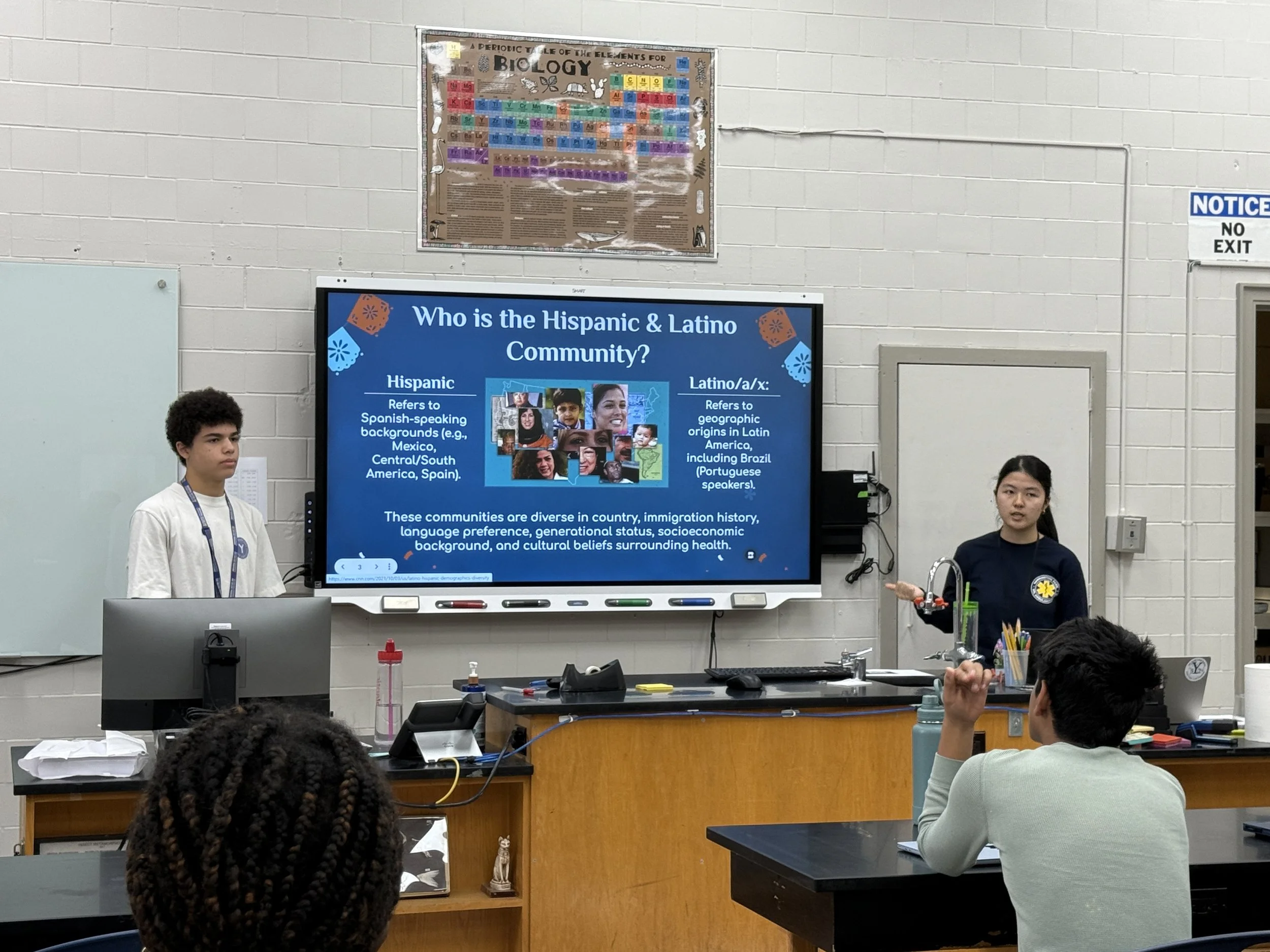
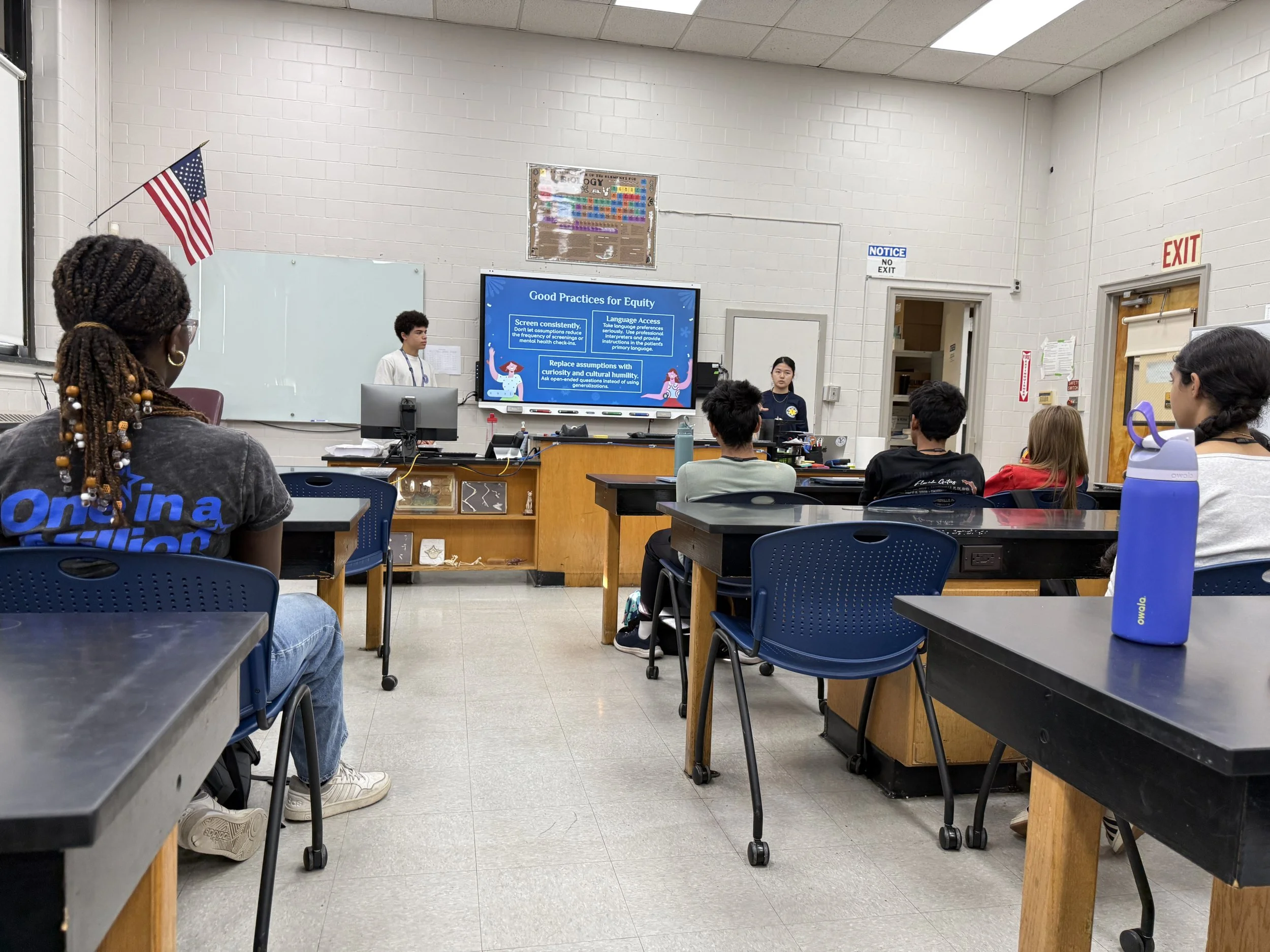
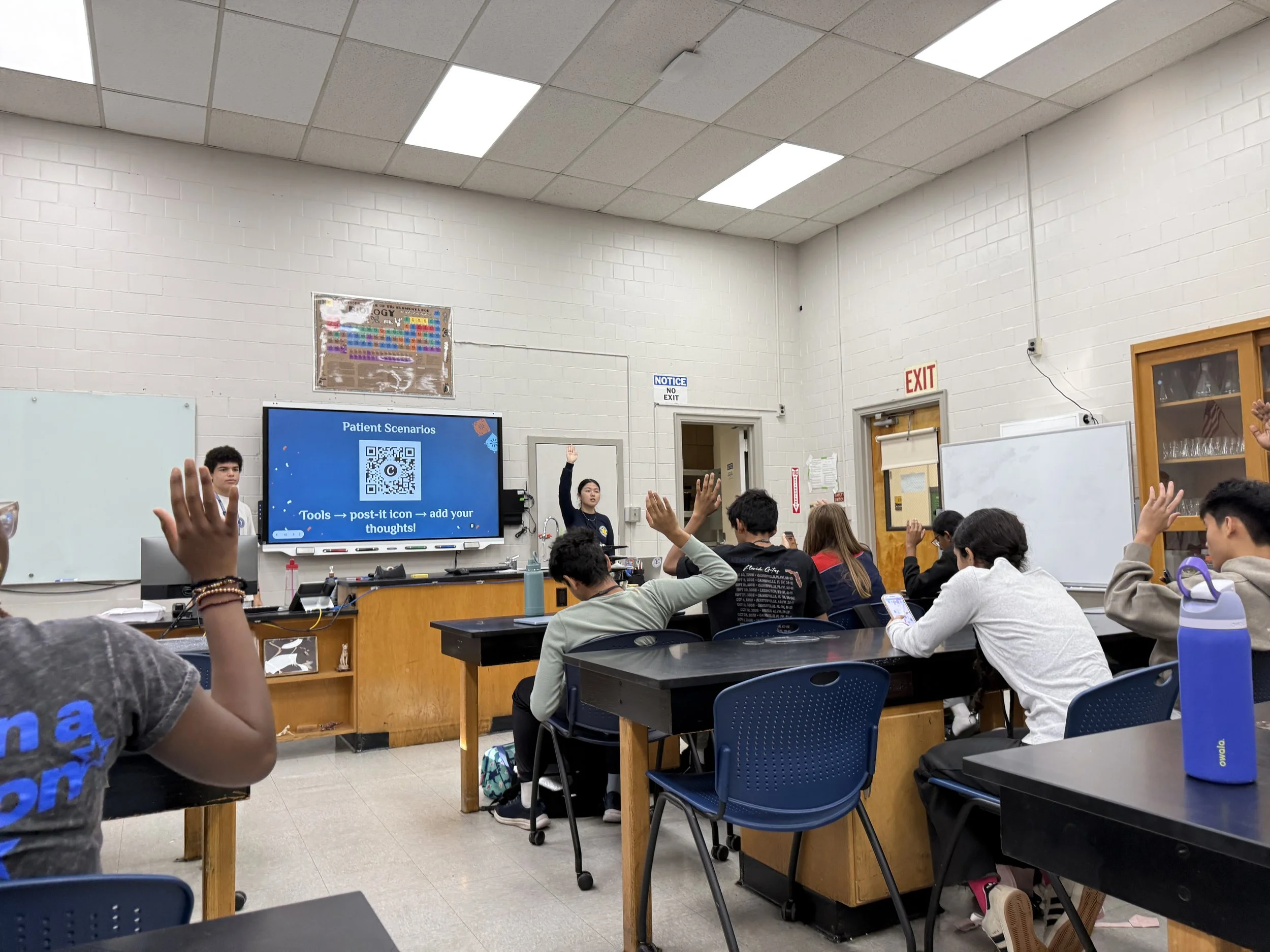
On September 25th, 2026, sophomores at the Bergen County Academies’ Academy for Medical Science Technology participated in the “Beyond the Label: Hispanic & Latino Stereotypes in Healthcare” seminar hosted by Pulse Parity. Isabella Oh (President & Founder) and Zachary Powell (Chief of Education) presented to 60 students on how biases can shape healthcare experiences for Hispanic and Latino communities. The seminar began by highlighting the diversity within these communities, emphasizing that Hispanic and Latino identities encompass a wide range of traits including countries of origin, language preferences, generational statuses, and socioeconomic backgrounds.
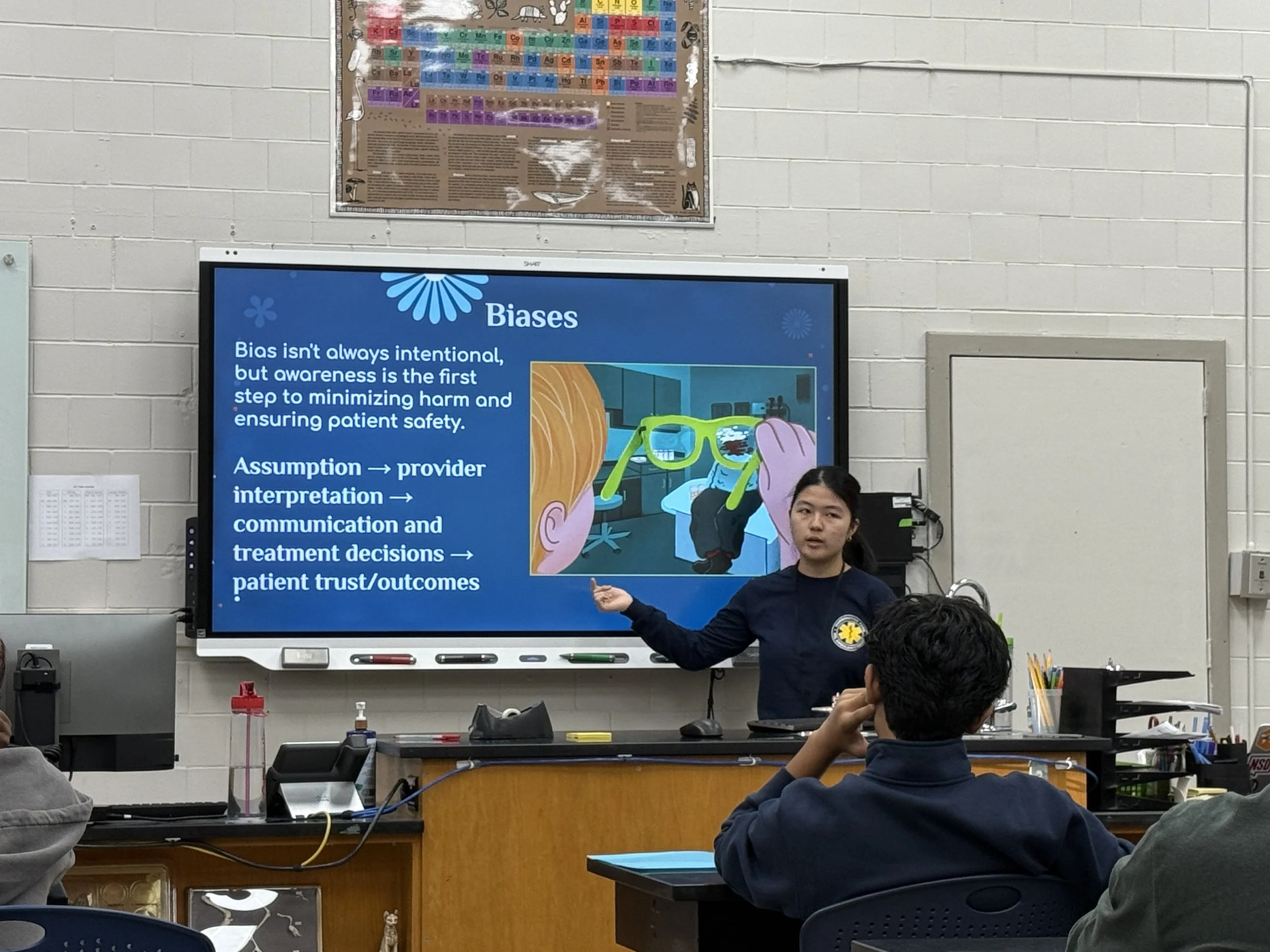
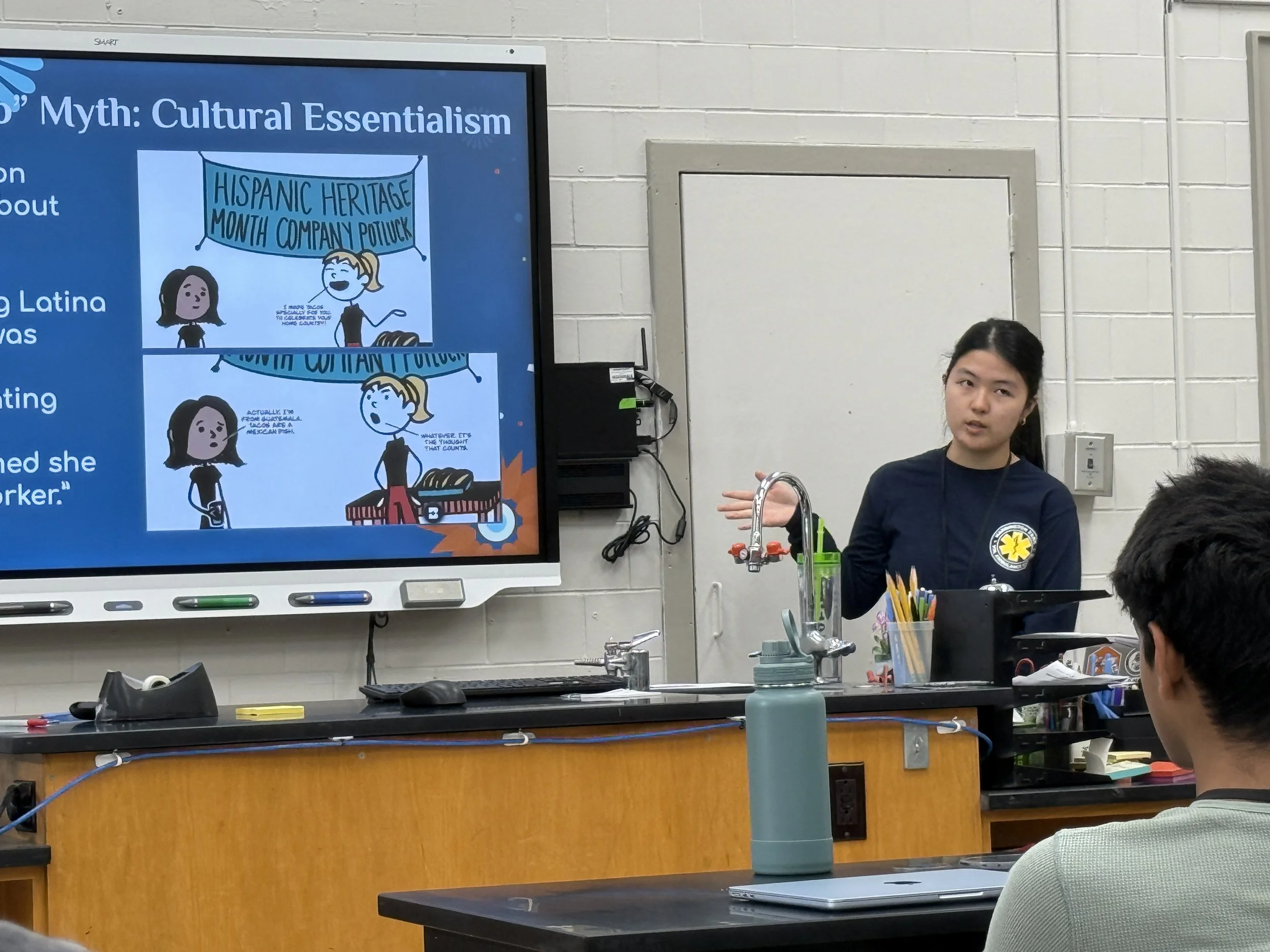
Students explored how a provider’s initial, often unintentional, assumptions can influence their interpretation of a patient, affect communication and treatment decisions, and ultimately impact patient trust and outcomes. Listeners were introduced to several common stereotypes affecting Hispanic and Latino patients, including the “Monolithic Latino” myth, which reduces diverse individuals to generalized ideas about Latino culture, and the “noncompliant patient” myth, which incorrectly attributes health outcomes to personal choices rather than considering broader factors such as cost, insurance, transportation, language barriers, trust, and previous experiences with discrimination.
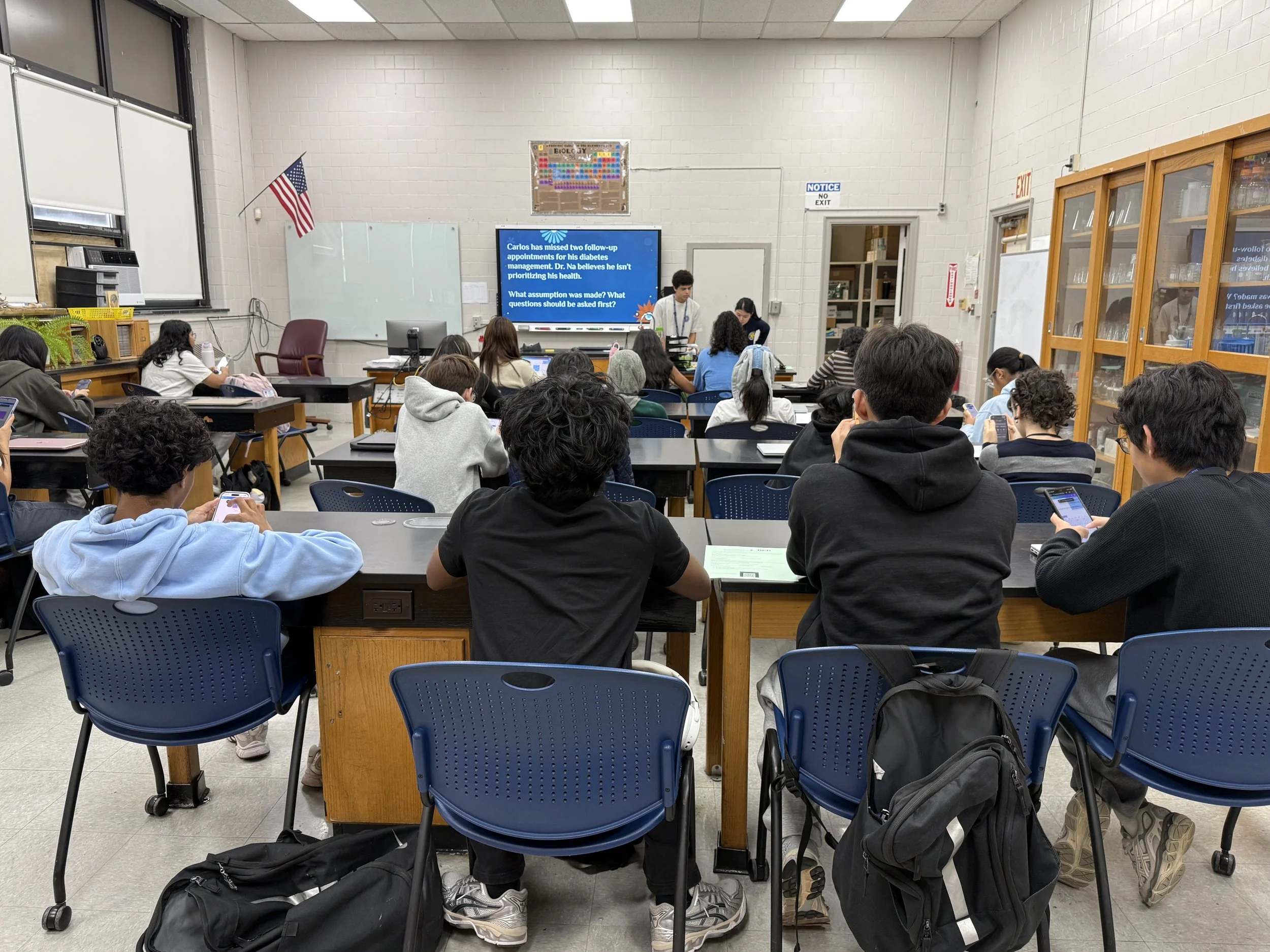
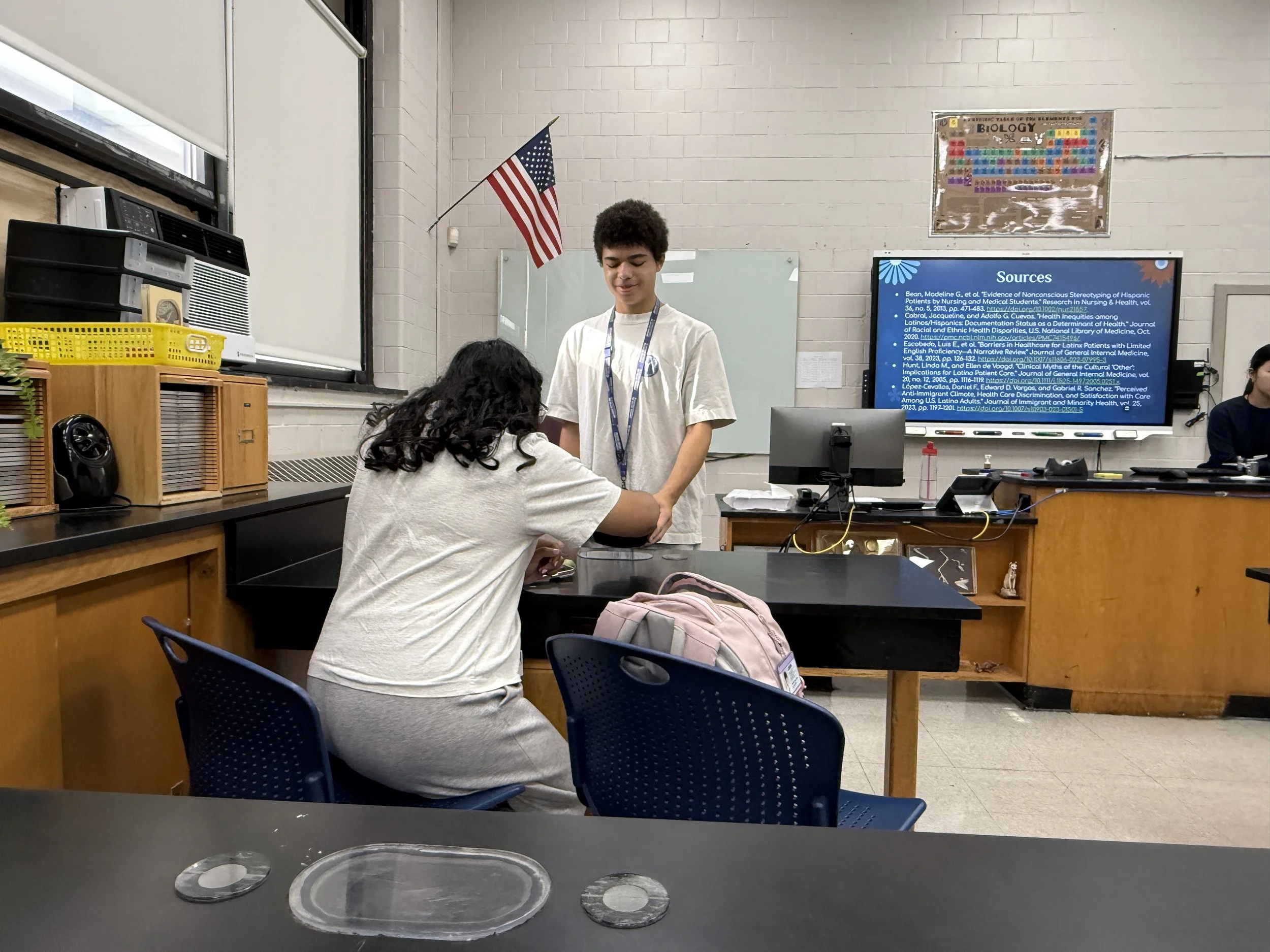
Students reflected on realistic patient scenarios involving Hispanic and Latino patients and examined how assumptions can shape healthcare interactions. In one scenario, students considered a physician’s assumption that a patient who missed diabetes follow-up appointments was not prioritizing his health, discussing what questions should be asked before reaching that conclusion. In another scenario, students analyzed how repeatedly asking a U.S. citizen for documentation during a routine appointment could reflect assumptions about immigration status and potentially affect a patient’s trust in the healthcare system. Students were encouraged to replace assumptions with curiosity and cultural humility, using open-ended questions, consistent screening practices, and appropriate language access resources to better support patients.
The presentation was designed to encourage future healthcare workers to recognize the connection between communication, trust, and equitable care. By challenging stereotypes and encouraging providers to approach each patient with curiosity and humility, Pulse Parity hopes to contribute to a healthcare system where every individual feels understood and valued.